Samsung Electronics (005930) · SK Hynix (000660)
Korean Semiconductor Stocks Drive KOSPI Toward Record Heights
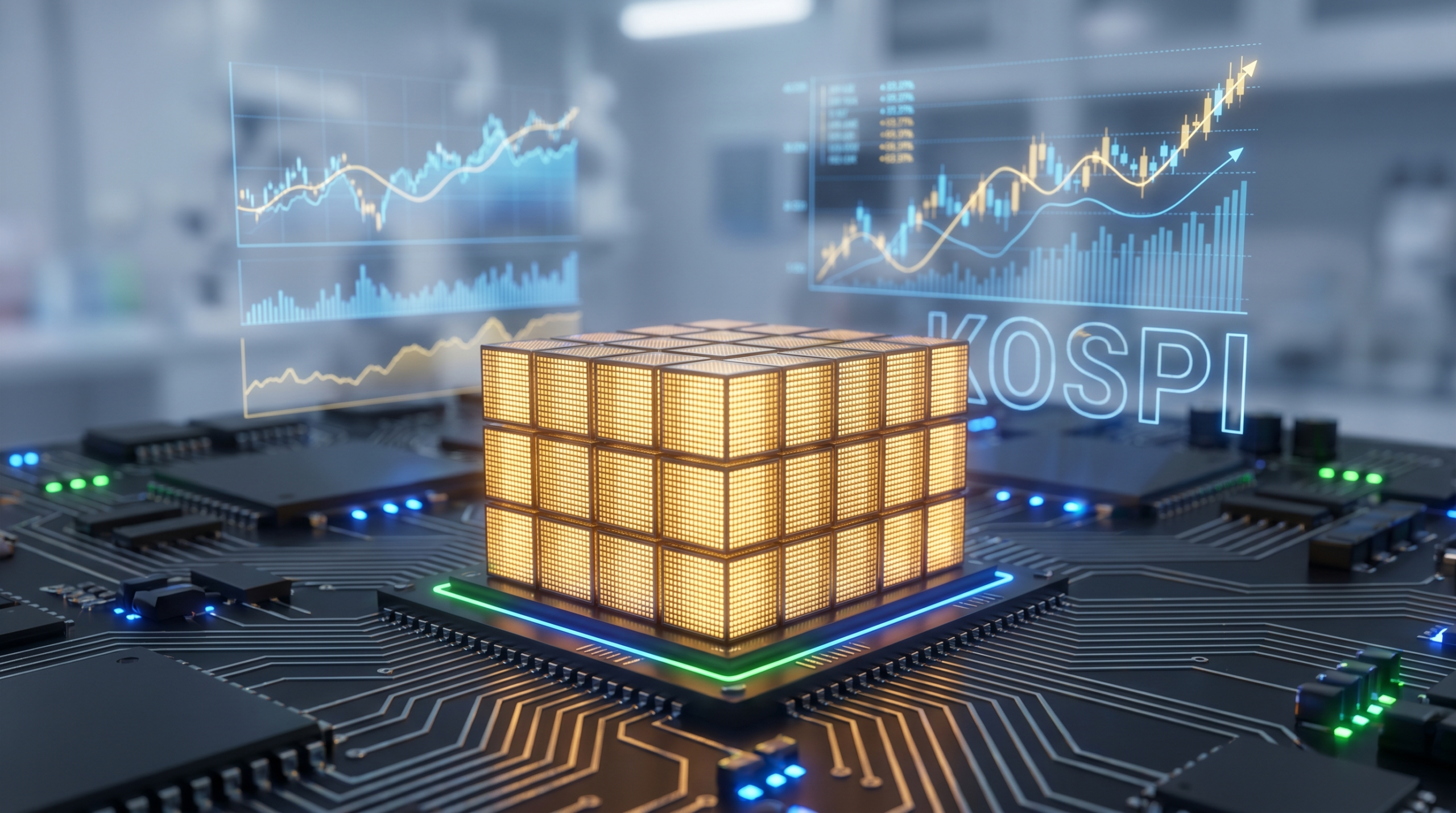
The South Korean equity market continues its remarkable ascent in early 2026, primarily fueled by a robust rally in Korean Semiconductor Stocks. As global demand for high-bandwidth memory (HBM) and next-generation AI chips reaches unprecedented levels, the heavyweights of the KOSPI—Samsung Electronics and SK Hynix—are leading a structural transformation of the national economy. This morning, investors are closely watching whether the benchmark index can stabilize above the 6,200-point threshold following a week of explosive growth.
The AI Memory Supercycle and Korean Semiconductor Stocks
The core narrative driving the current market sentiment is the “AI Memory Supercycle.” Unlike previous cycles driven by mobile or PC demand, the current expansion is rooted in the massive infrastructure build-out for artificial intelligence. Korean Semiconductor Stocks have become the primary beneficiaries of this shift. Samsung Electronics (005930), which has successfully integrated its advanced HBM3E and HBM4 prototypes into global supply chains, saw its stock price climb significantly over the past week, currently trading around the 218,000 KRW mark.
Even more striking is the performance of SK Hynix (000660). As the early leader in the HBM market, SK Hynix has seen its valuation soar to over 1.1 million KRW per share. Anticipation for its upcoming earnings report is at an all-time high, with analysts predicting record-breaking operating profits that could redefine the company’s fiscal trajectory. The synergy between these two giants has created a “semiconductor-first” investment climate in Seoul, drawing massive inflows from foreign institutional investors.
Market Brief: KOSPI and KOSDAQ Performance
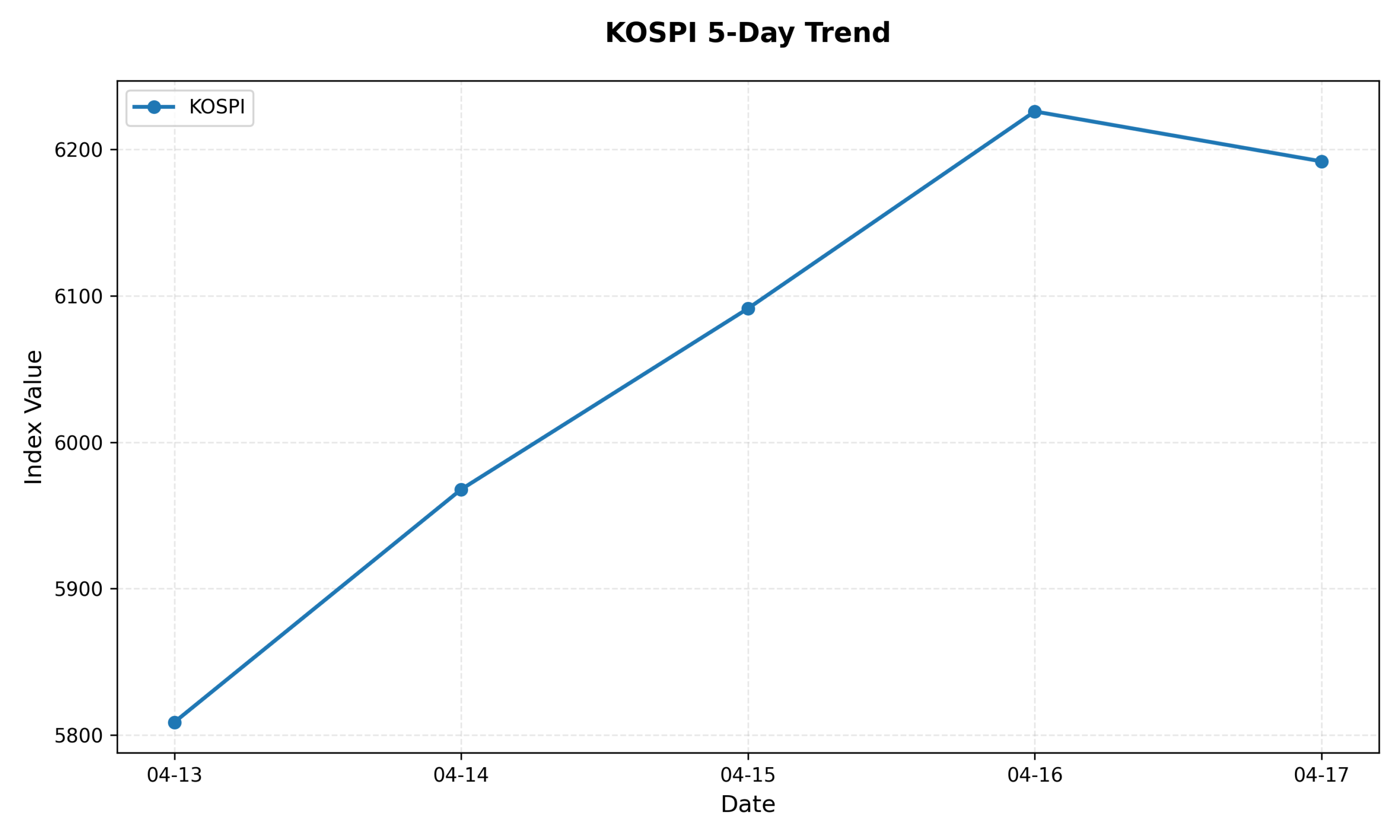
According to the latest data from Naver Finance and the Korea Exchange (KRX), the KOSPI closed on April 17 at 6,191.92, a slight 0.55% correction after a week that saw the index jump by over 5.68%. The rally was particularly intense on April 16, when the index hit 6,226.05, marking a new milestone for the South Korean market. Despite the minor pullback on Friday, the underlying momentum remains strong, supported by high trading volumes exceeding 24 trillion KRW.
The KOSDAQ index has also shown resilience, closing at 1,170.04 with a 0.61% gain. While the KOSPI is dominated by large-cap hardware manufacturers, the KOSDAQ’s growth is being driven by the broader ecosystem of semiconductor equipment providers and specialized software firms that support the AI infrastructure. Companies like Hanmi Semiconductor and Lee-No Industrial are seeing increased interest as the supply chain for Korean Semiconductor Stocks expands.
Macroeconomic Winds: Geopolitics and Ceasefire Hopes
Beyond the tech sector, broader macroeconomic factors are providing a favorable backdrop for the KOSPI. Recent news of potential ceasefire negotiations in the Middle East has eased global energy concerns, which is critical for South Korea as a major energy importer. The resulting stabilization of the Korean Won against the US Dollar has made Korean Semiconductor Stocks even more attractive to international funds, who see the combination of technological leadership and a stable currency as a winning formula.
Furthermore, internal links to platforms like kstocks.net suggest that retail participation is also at a peak. The “FOMO” (fear of missing out) sentiment is palpable as the KOSPI breaks through levels once thought unreachable. However, seasoned analysts caution that while the supercycle is real, the pace of the rally necessitates a careful evaluation of valuations and potential overbought conditions in the short term.
Conclusion: A Structural Shift in Seoul
As we head into the final week of April, the focus remains squarely on how Korean Semiconductor Stocks will digest their recent gains. With SK Hynix earnings on the horizon and Samsung’s continued expansion into foundry services, the semiconductor sector is no longer just a cyclical component of the Korean market—it is its primary engine. Investors are advised to maintain a diversified approach while acknowledging the central role that AI memory technology plays in the current global economic landscape.
Data Source: Naver Finance, KRX, Trading Economics
Investment Disclaimer: The information provided in this article is for informational purposes only and does not constitute financial, investment, or legal advice. Investing in the stock market involves risks, including the loss of principal. Past performance is not indicative of future results. Please consult with a qualified financial advisor before making any investment decisions.
About the Author
Johnny Lee
Seoul-based full-time professional and individual investor with 5 years of active experience in the Korean stock market. My approach combines value investing with medium-term swing trading across a diversified portfolio. In 2025, my personal account delivered a 72.9% return, significantly outperforming the KOSPI benchmark. I started KStocks to bring the Korean investor perspective directly to a global English-speaking audience.
Korean blog: blog.naver.com/taximum | Contact: golchoa@gmail.com