Samsung Electronics (005930) · SK Hynix (000660)

KOSPI Reclaims 6,000 Level Driven by Record Chip Rally
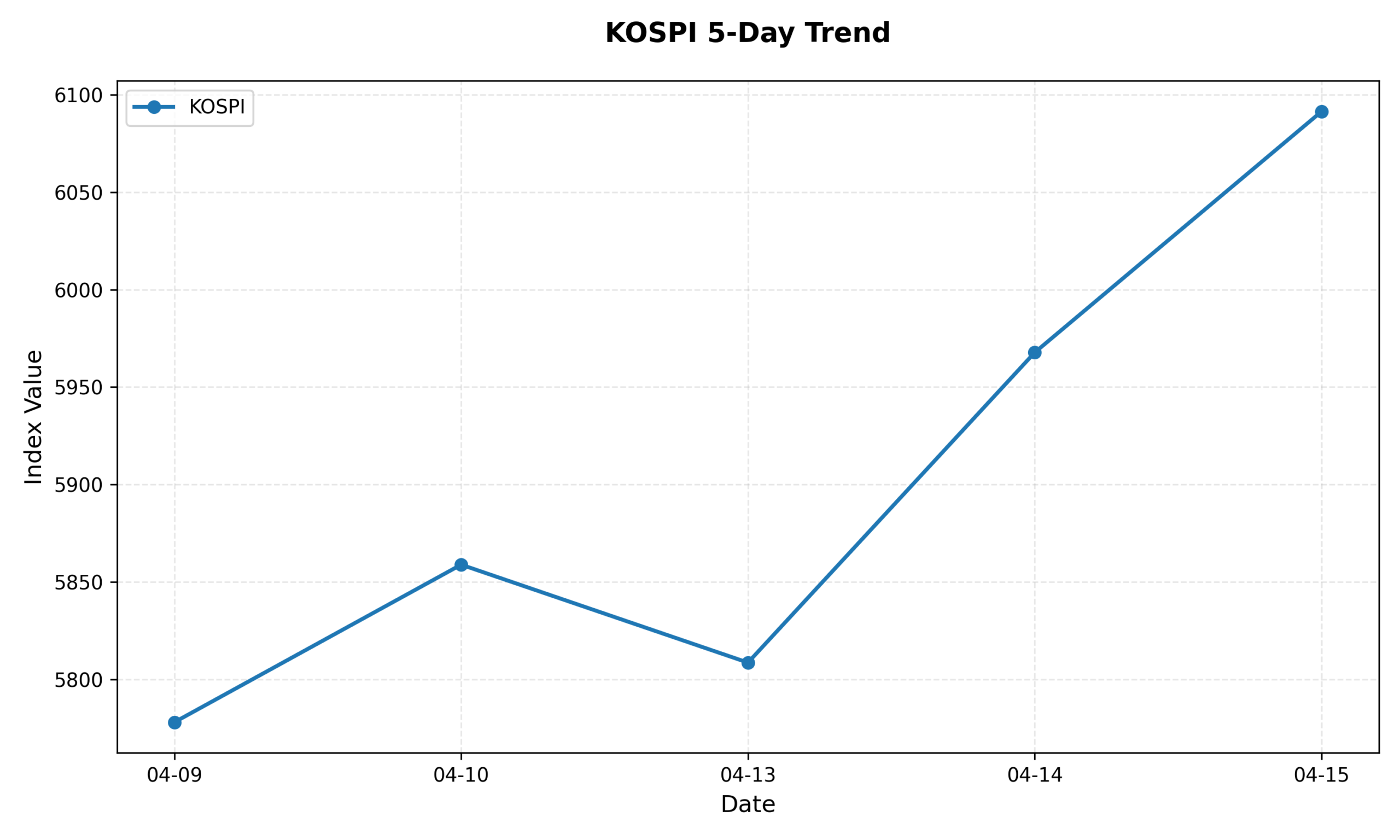
The South Korean stock market witnessed a historic milestone on April 15, 2026, as the benchmark KOSPI index surged past the 6,000-point threshold. This remarkable recovery, coming after 30 sessions of consolidation, was spearheaded by a massive KOSPI 6000 Chip Rally led by global semiconductor giants Samsung Electronics and SK Hynix. According to data from Naver Finance and the Korea Exchange (KRX), the KOSPI closed at 6,091.39, marking a significant 2.07% increase from the previous day.
The primary driver behind this momentum was a renewed risk appetite in the semiconductor sector, fueled by positive outlooks on global demand and improving geopolitical conditions. Foreign and institutional investors returned as aggressive buyers, injecting fresh liquidity into the market and pushing the index to levels not seen in months.
Semiconductor Giants Lead the Surge
The KOSPI 6000 Chip Rally was most evident in the performance of the nation’s top-tier tech stocks. Samsung Electronics (005930), the world’s largest memory chip maker, saw its stock price climb by 3.73%, closing at 208,500 won. Market analysts attribute this rise to robust export data and expectations of strong fourth-quarter earnings driven by advancements in high-bandwidth memory (HBM) and AI-related chip demand.
SK Hynix (000660) outperformed even further, hitting a fresh record high. The company’s stock skyrocketed by 7.40%, finishing the session at 1,117,000 won. The rally in SK Hynix reflects its dominant position in the next-generation memory market and the broader “chip rally” that is currently lifting the entire Korean tech ecosystem. Both companies continue to benefit from the global AI infrastructure build-out, making them the cornerstones of the current market trajectory.
Macro Factors and Investor Sentiment
Beyond the tech sector, several macro factors contributed to the bullish sentiment. Reports of potential breakthroughs in U.S.-Iran negotiations provided a much-needed relief to global energy markets and eased geopolitical tensions, encouraging investors to pivot back toward riskier assets in emerging markets like South Korea. This shift was particularly beneficial for the KOSPI 6000 Chip Rally, as it stabilized the currency market and supported foreign capital inflows.
Institutional investors also played a crucial role, with significant buying pressure observed across the board. The collective buying from foreign and domestic institutions reached hundreds of billions of won, underscoring a broad-based confidence in the recovery of the Korean economy and its export-oriented sectors. For more detailed analysis on market trends, visit kstocks.net.
KOSDAQ and Market Outlook
The tech-heavy KOSDAQ index also shared in the gains, closing at 1,152.43, up 2.72%. The rally in KOSDAQ was driven by secondary battery stocks and smaller semiconductor equipment providers that form the supply chain for the major chipmakers. The synergy between the KOSPI and KOSDAQ indicates a healthy, broad-based market recovery rather than a localized bubble.
Looking ahead, market participants are keeping a close eye on upcoming earnings releases and central bank commentary. While the reclamation of the 6,000 level is a strong psychological victory, maintaining this momentum will require continued strength in export figures and a stable global macroeconomic environment. Analysts suggest that the KOSPI 6000 Chip Rally could extend further if the current trend of foreign buying persists throughout the quarter.
Data Source: Naver Finance, KRX (Korea Exchange)
Disclaimer: Investment in the stock market involves risk. The information provided in this article is for informational purposes only and does not constitute financial advice. Past performance is not indicative of future results. Please consult with a professional financial advisor before making any investment decisions.
About the Author
Johnny Lee
Seoul-based full-time professional and individual investor with 5 years of active experience in the Korean stock market. My approach combines value investing with medium-term swing trading across a diversified portfolio. In 2025, my personal account delivered a 72.9% return, significantly outperforming the KOSPI benchmark. I started KStocks to bring the Korean investor perspective directly to a global English-speaking audience.
Korean blog: blog.naver.com/taximum | Contact: golchoa@gmail.com