Samsung Electronics (005930) · SK Hynix (000660)

South Korean Markets Face Semiconductor Market Shock
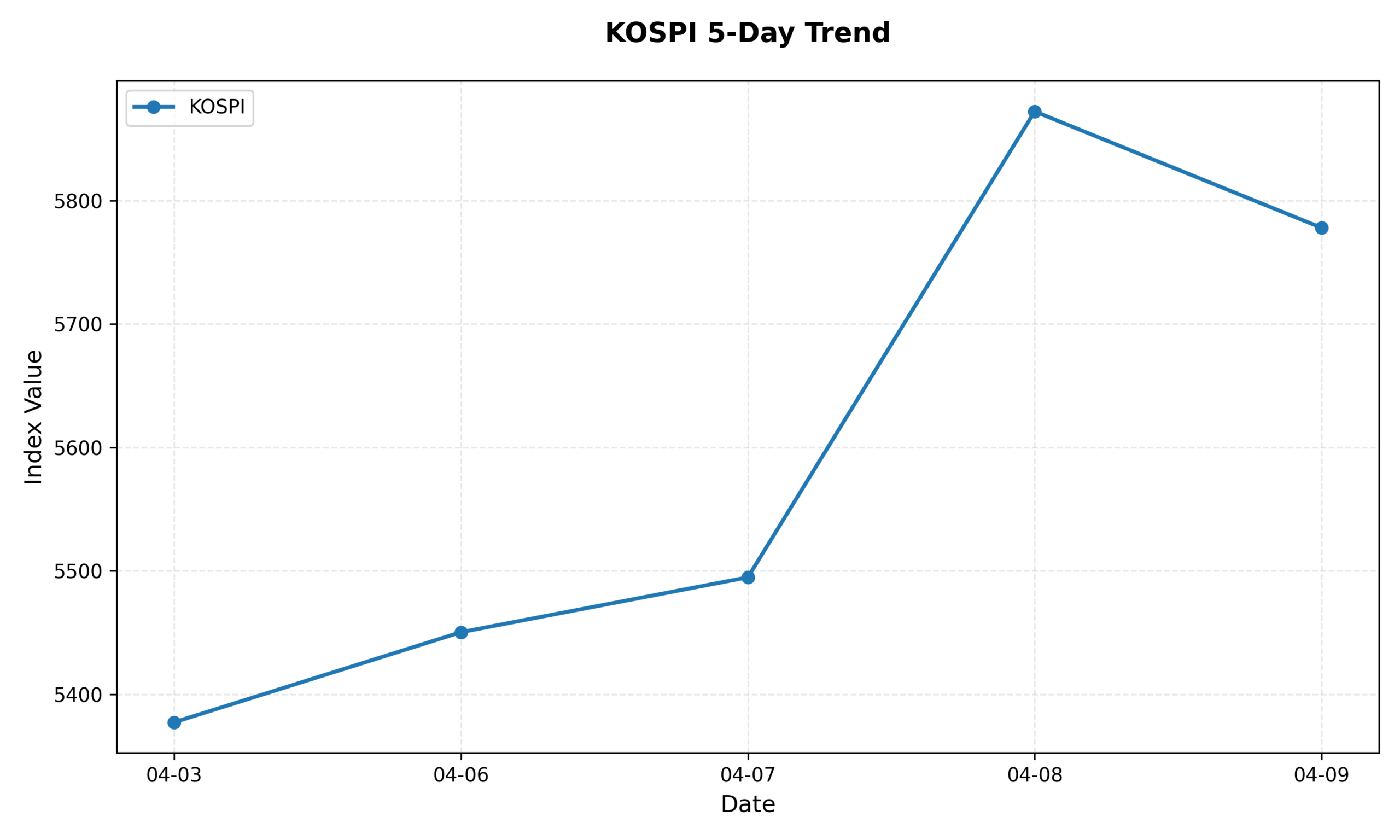
The South Korean stock market experienced a significant downturn on April 9, 2026, as the benchmark KOSPI index fell by 1.61% to close at 5,778.01. This decline was primarily driven by a Semiconductor Market Shock, with industry giants Samsung Electronics and SK Hynix seeing their stock prices tumble by approximately 3%. Investors are increasingly concerned about a potential slowdown in global semiconductor demand and the impact of persistent inflationary pressures on the tech sector.
Heavyweight Tech Stocks Lead the Decline
The Semiconductor Market Shock hit the heavyweights hard. Samsung Electronics (005930), the world’s largest memory chip maker, saw its shares slide as global macro uncertainty dampened investor sentiment. Similarly, SK Hynix (000660) faced stiff selling pressure. Analysts point to a combination of factors, including higher-than-expected inflation data from the U.S. and a cautious outlook on AI-driven demand, which had previously propelled these stocks to record highs earlier in the week.
According to data from Naver Finance and the Korea Exchange (KRX), the KOSPI’s volatility has increased significantly in the first half of April. While the index reached a peak of 5,872.34 on April 8th, the sudden reversal highlights the fragile nature of the current rally. Market participants are now closely watching for any signs of stabilization in the semiconductor supply chain and future earnings guidance from major tech firms.
Market Outlook and Investment Strategy
The KOSDAQ index also fell by 1.27% to 1,076.00, reflecting a broad-based retreat in growth stocks. As the Semiconductor Market Shock continues to resonate through the market, experts at kstocks.net suggest that investors should focus on defensive sectors and monitor the upcoming quarterly earnings reports for fundamental clarity. The divergence between different tech segments suggests that a selective approach may be necessary in the coming weeks.
Looking ahead, the direction of the Korean stock market will likely be influenced by foreign capital flows and the Bank of Korea’s stance on interest rates. While the long-term prospects for the semiconductor industry remain robust due to the ongoing AI revolution, the short-term volatility induced by the current Semiconductor Market Shock serves as a reminder of the risks inherent in the tech-heavy Korean market.
Disclaimer: This article is for informational purposes only and does not constitute financial advice. Investors should conduct their own research or consult with a qualified financial advisor before making any investment decisions. Data Source: Naver Finance, KRX.
About the Author
Johnny Lee
Seoul-based full-time professional and individual investor with 5 years of active experience in the Korean stock market. My approach combines value investing with medium-term swing trading across a diversified portfolio. In 2025, my personal account delivered a 72.9% return, significantly outperforming the KOSPI benchmark. I started KStocks to bring the Korean investor perspective directly to a global English-speaking audience.
Korean blog: blog.naver.com/taximum | Contact: golchoa@gmail.com