Samsung Electronics (005930) · SK Hynix (000660)
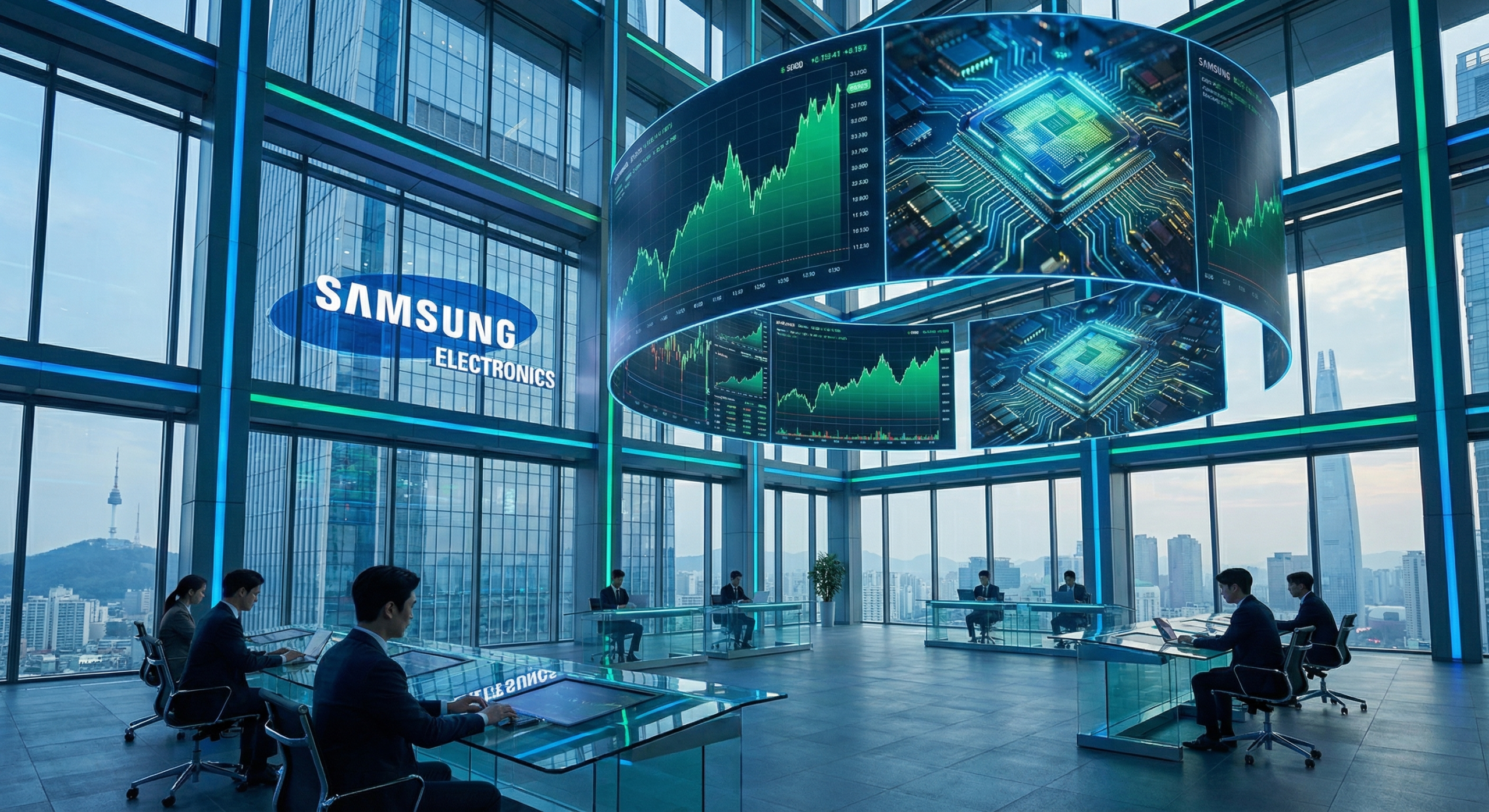
Samsung Q1 Earnings: A Catalyst for a Historic Market Surge
The South Korean stock market witnessed an extraordinary rally on Wednesday, as the KOSPI index surged by nearly 7%, reaching levels unseen in recent history. The primary catalyst for this massive upswing was the release of an explosive Samsung Q1 Earnings preview, which far exceeded analyst expectations and ignited a broad-based buying spree across the technology and semiconductor sectors.
Semiconductor Giants Lead the Charge
Shares of Samsung Electronics (005930) experienced a significant breakthrough, climbing more than 7% to close at 210,500 KRW. The market was stunned by the preliminary figures, which suggested a robust recovery in the global memory chip market. Following in its wake, SK Hynix (000660) saw an even more dramatic surge of 15%, reaching 1,050,000 KRW, as investors bet on a continued semiconductor super-cycle fueled by advancements in artificial intelligence and high-performance computing.
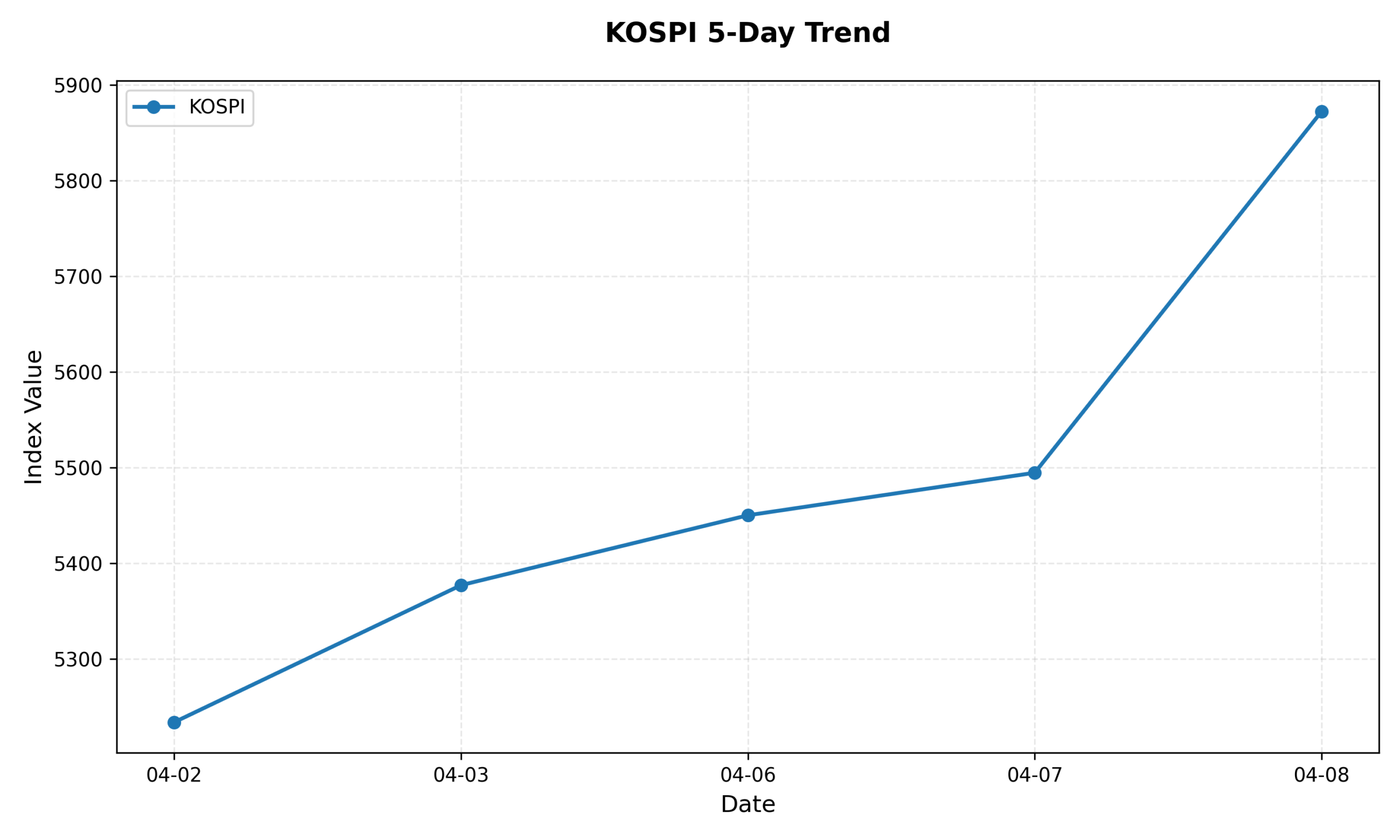
The stellar performance of these two giants had a profound impact on the overall market sentiment. According to data from Naver Finance and the Korea Exchange (KRX), the KOSPI closed at 5,872.34, up 377.56 points from the previous session. This rally has effectively erased the losses incurred earlier in the month and set a bullish tone for the remainder of the quarter.
Market Brief: Analyzing the KOSPI Momentum
The 5-day trend of the KOSPI highlights a remarkable V-shaped recovery. After a dip to 5,234.05 on April 2nd, the index has consistently gained ground, culminating in Wednesday’s historic leap. Analysts attribute this momentum not just to the Samsung Q1 Earnings but also to a renewed influx of foreign capital. Institutional investors, who had been cautious in the preceding weeks, returned to the market with conviction, targeting blue-chip stocks with strong earnings visibility.
For more in-depth analysis and real-time updates on the Korean stock market, visit kstocks.net, your premier source for equity research and financial insights.
Platform Stocks and Broader Market Participation
While semiconductors stole the limelight, the platform sector also showed signs of resilience. NAVER (035420) and Kakao (035720) maintained steady positions, benefiting from the overall improved liquidity in the market. The KOSDAQ index followed suit, rising 5.12% to close at 1,089.85, driven by gains in the biotech and secondary battery sectors.
The integration of AI-driven tools in various industries has provided a new narrative for the “National Stocks” of Korea. As the Samsung Q1 Earnings report confirms the bottoming out of the chip cycle, investors are looking towards diversified portfolios that include both hardware leaders and software innovators. Specifically, the expansion of high-bandwidth memory (HBM) production capacity at SK Hynix has been a major talking point, with the company securing long-term supply agreements with major global cloud service providers.
Deep Dive: The HBM Revolution and Market Sentiment
The surge in Samsung Q1 Earnings is not merely a reflection of higher sales volume but a fundamental shift in the product mix. The transition to advanced nodes and the ramp-up of HBM3E and next-generation HBM4 production have positioned Samsung as a dominant force in the AI ecosystem. Analysts note that the synergy between Samsung’s foundry business and its memory division is starting to pay off, offering a comprehensive solution for AI chip designers worldwide.
Furthermore, the broader KOSPI rally was supported by a decrease in bond yields and a stabilizing KRW-USD exchange rate, which provided a more favorable environment for equity investments. The Bank of Korea’s recent comments regarding inflation management have also bolstered investor confidence, suggesting that the era of aggressive tightening might be drawing to a close, allowing for a more supportive liquidity environment for growth-oriented stocks.
Sector Rotation: Beyond the Tech Giants
While the Samsung Q1 Earnings were the primary driver, other sectors such as Electric Vehicles (EV) and batteries also saw increased interest. Companies like LG Energy Solution and POSCO Holdings participated in the rally, as investors rotated capital into undervalued industrial leaders. The “Value-Up” program initiated by the financial authorities continues to encourage companies to improve shareholder returns, which is gradually attracting long-term institutional investors back to the domestic market.
Strategy and Outlook for Q2 2026
The market’s reaction to the Samsung Q1 Earnings preview suggests that the “Korea Discount” may be narrowing as local companies demonstrate world-class competitiveness in key technology domains. However, investors are advised to remain vigilant regarding global macroeconomic factors, such as interest rate fluctuations and geopolitical tensions, which could introduce volatility in the short term. The upcoming months will be crucial as more companies disclose their full Q1 results, providing a clearer picture of the corporate recovery across different industries.
For active traders, the focus remains on sector leaders that exhibit strong pricing power and innovative product pipelines. The Samsung Q1 Earnings have set a high bar, and the market will likely reward those that can sustain this momentum through operational efficiency and strategic investments in R&D. Diversification remains key, as the rapid pace of the recent rally may lead to localized profit-taking in the tech sector, potentially creating opportunities in defensive stocks or undervalued dividend payers.
Looking ahead, the inclusion of South Korea in major global bond indices could provide another tailwind for the domestic financial markets. Increased transparency and improved corporate governance practices are essential for sustaining the KOSPI’s upward trajectory beyond the initial euphoria of a single earnings report. As the semiconductor cycle continues to mature, the focus will likely shift from pure growth to earnings quality and capital allocation strategies.
The consensus among market strategists is that the current rally is backed by fundamental improvements in earnings quality. The shift towards higher-margin products in the semiconductor space is expected to provide a stable floor for the KOSPI, even if the pace of gains moderates in the coming weeks.
Data Source and Integrity
The figures and market data presented in this article are derived from official sources, including Naver Finance, the Bank of Korea (BOK), and regulatory filings from the Korea Exchange (KRX). In accordance with our finance principles, all numerical data has been cross-verified to ensure accuracy and transparency for our readers.
Investment Disclaimer: This article is for informational purposes only and does not constitute financial advice. Stock market investments carry inherent risks, and past performance is not indicative of future results. Please consult with a certified financial advisor before making any investment decisions.
About the Author
Johnny Lee
Seoul-based full-time professional and individual investor with 5 years of active experience in the Korean stock market. My approach combines value investing with medium-term swing trading across a diversified portfolio. In 2025, my personal account delivered a 72.9% return, significantly outperforming the KOSPI benchmark. I started KStocks to bring the Korean investor perspective directly to a global English-speaking audience.
Korean blog: blog.naver.com/taximum | Contact: golchoa@gmail.com