Samsung Electronics (005930) · SK Hynix (000660) · NAVER (035420) · Kakao (035720)
The Impact of the Trump Tariff Shock on the Korean Market
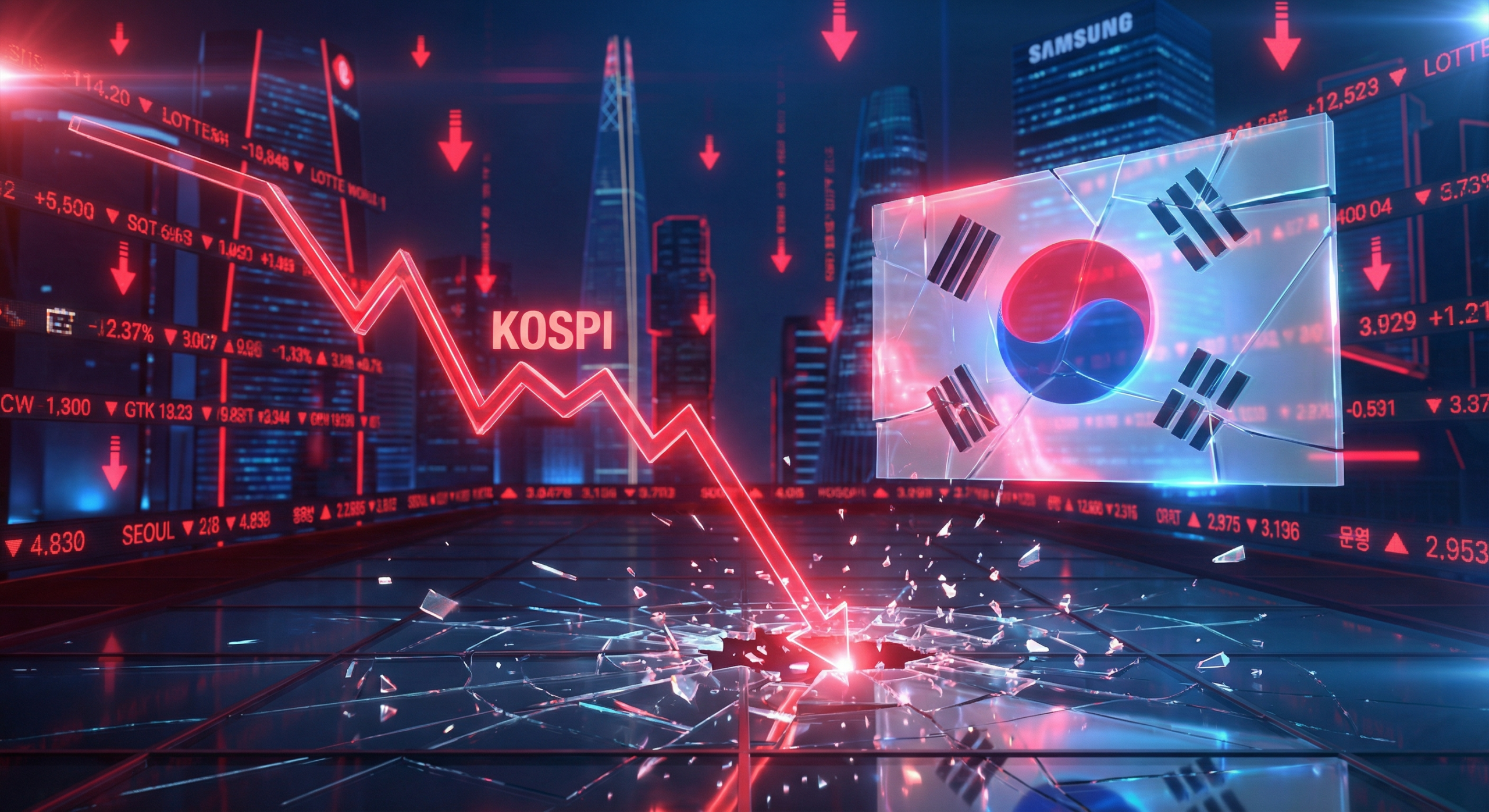
The South Korean financial markets experienced a significant downturn on April 2, 2026, as investors reacted to the unexpected announcement of new import tariffs by the Trump administration. This “Trump Tariff Shock” has sent ripples through global markets, but the export-heavy Korean economy has been particularly hard hit. The KOSPI index, the benchmark of the Korean Stock Exchange, fell by over 4%, marking one of the most severe daily declines in recent years.
A Black Thursday for KOSPI and KOSDAQ
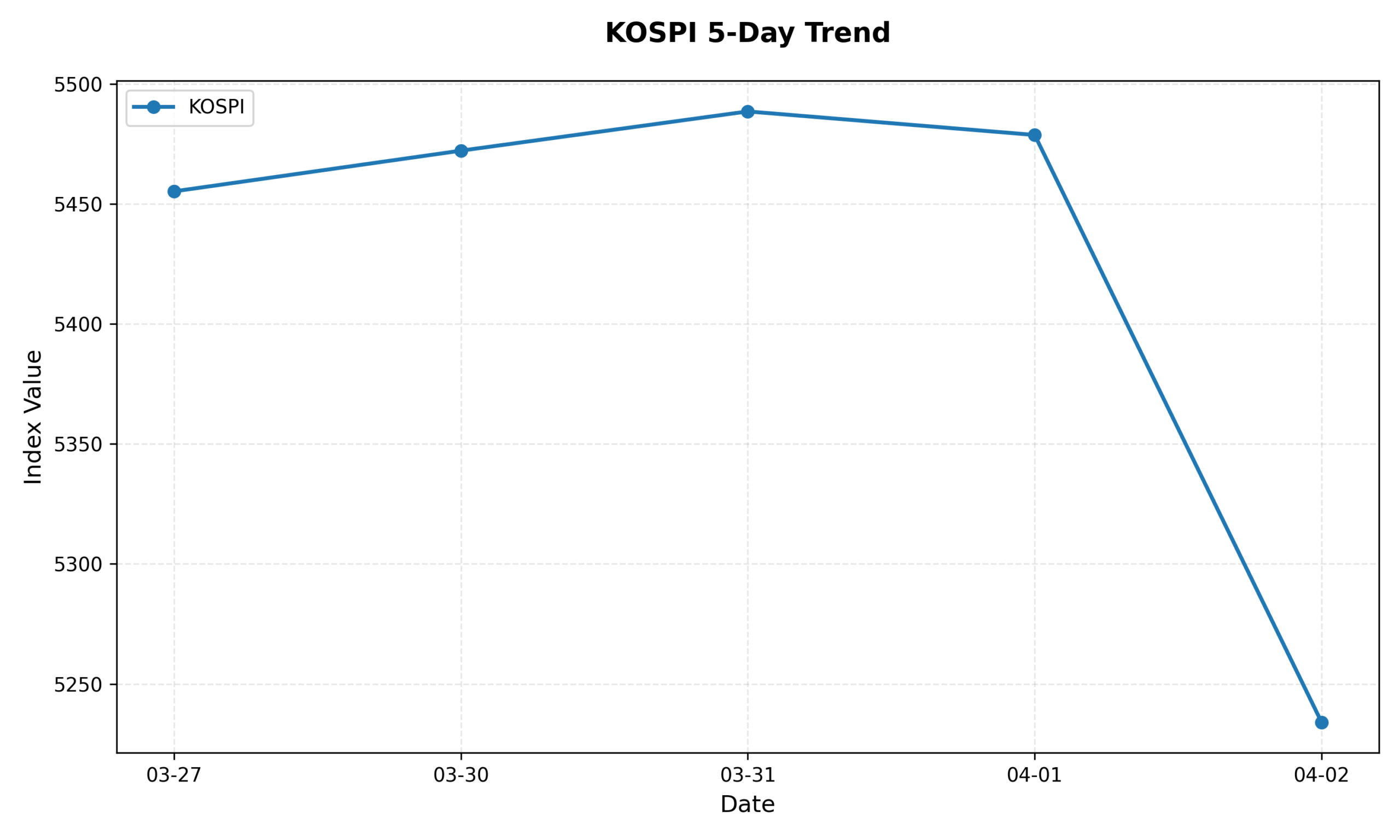
According to the latest data from Naver Finance and the Korea Exchange (KRX), the KOSPI index closed at 5,234.05 points, down 244.65 points or 4.47% from the previous session. The tech-heavy KOSDAQ index fared even worse, plummeting 5.36% to close at 1,056.34 points. The aggressive selling by both foreign and institutional investors underscored the deep-seated fears regarding the potential for a renewed trade war and its impact on Korea’s trade-dependent growth model.
The primary driver for this sudden collapse was the “Trump Tariff Shock,” which involves a proposed 10-20% universal baseline tariff on all imports to the United States. Given that the U.S. is one of South Korea’s largest trading partners, particularly for automobiles and high-tech components, the market’s reaction was swift and decisive. Analysts at major brokerages like Goldman Sachs and Yuanta Securities have already begun revising their target prices for major Korean indices and blue-chip stocks, citing the increased risk of stagflation and reduced export margins.
Semiconductor Giants Under Pressure
The semiconductor sector, which accounts for a substantial portion of Korea’s market capitalization, bore the brunt of the sell-off. Samsung Electronics (005930) and SK Hynix (000660) saw their stock prices slide as concerns mounted over supply chain disruptions and potentially higher costs for shipping products to the U.S. market. For Samsung Electronics, which has already been struggling with intense competition in the foundry business and fluctuating memory prices, this external shock adds another layer of complexity to its recovery efforts.
SK Hynix also saw significant downward pressure, despite recent gains in the high-bandwidth memory (HBM) sector. The threat of new tariffs could complicate the company’s long-term investment plans in North America, leading to a more cautious outlook among institutional investors. As the market digests the full implications of the Trump Tariff Shock, the “Buy” ratings maintained by several domestic brokerages are being put to the test, with many retail investors seeking safer haven assets or moving towards defensive sectors.
Strategic Response and Market Outlook
In response to the market volatility, Korean financial authorities have moved to implement new measures to stabilize the exchange. One significant development is the finalization of a decision to allow single-stock leveraged exchange-traded funds (ETFs) based on Samsung Electronics and SK Hynix. This move is intended to provide sophisticated investors with more tools to manage their portfolios, though critics warn it could also lead to increased volatility in the underlying stocks.
As the market prepares for the final trading session of the week on April 3, the focus remains on the “Trump Tariff Shock” and any potential diplomatic response from the Korean government. Investors are advised to maintain a diversified portfolio and keep a close eye on further macro developments. For more detailed analysis and real-time updates, you can check our daily market strategy reports at kstocks.net.
Data Source: Naver Finance, Korea Exchange (KRX)
Disclaimer: The information provided in this article is for informational purposes only and does not constitute financial or investment advice. Investing in the stock market involves significant risks, including the potential loss of principal. Always consult with a qualified financial advisor before making any investment decisions.
About the Author
Johnny Lee
Seoul-based full-time professional and individual investor with 5 years of active experience in the Korean stock market. My approach combines value investing with medium-term swing trading across a diversified portfolio. In 2025, my personal account delivered a 72.9% return, significantly outperforming the KOSPI benchmark. I started KStocks to bring the Korean investor perspective directly to a global English-speaking audience.
Korean blog: blog.naver.com/taximum | Contact: golchoa@gmail.com