Samsung Electronics (005930) · SK Hynix (000660)
The AI-Driven Transformation of the Korean Stock Market
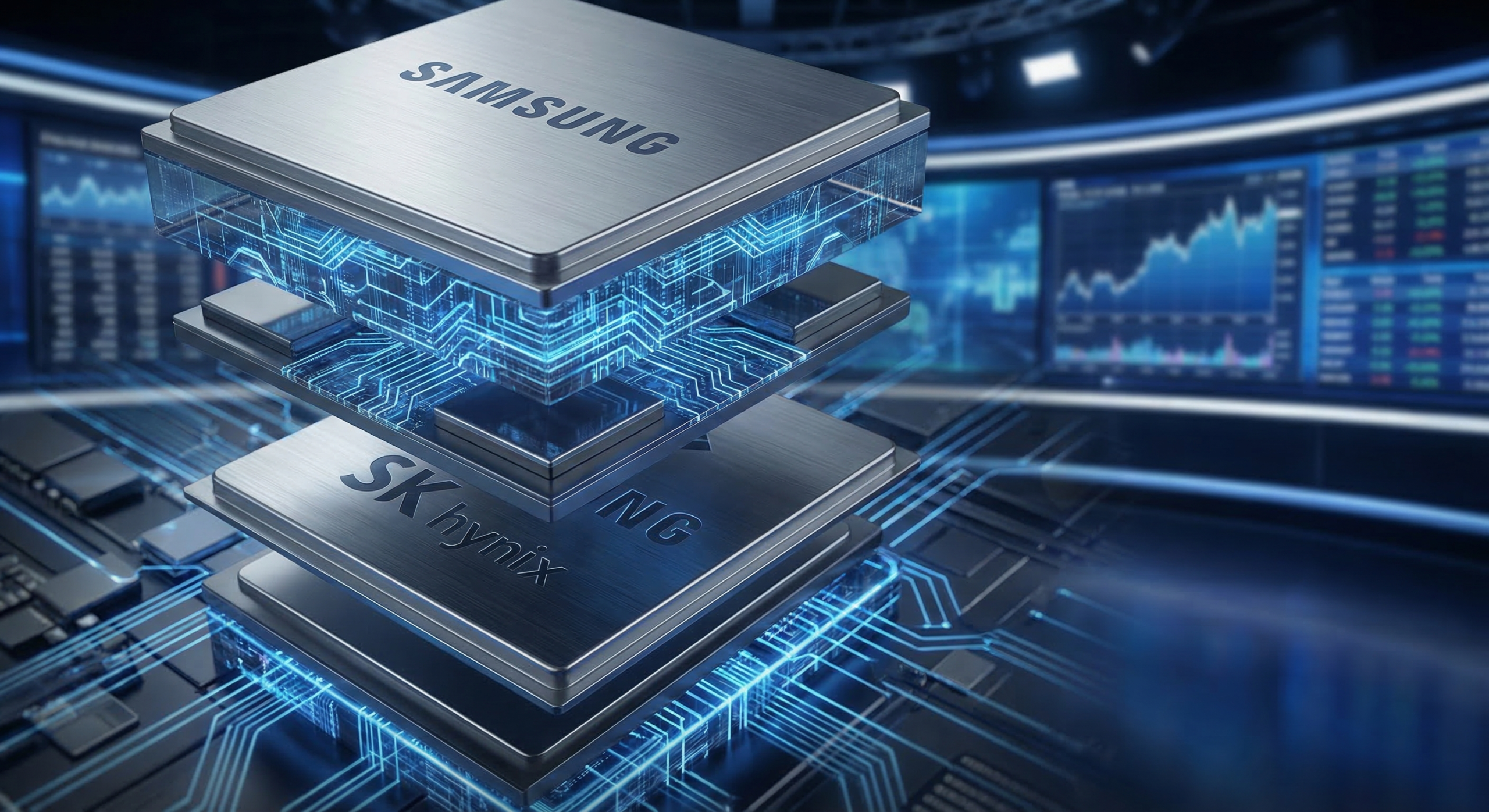
On Wednesday, March 18, 2026, the South Korean equity market witnessed a historic surge, propelled by a renewed wave of optimism in the semiconductor sector. Samsung Electronics and SK Hynix, the twin pillars of the KOSPI, led the charge as investors reacted to global catalysts and domestic technological milestones. The rally, characterized by significant capital inflows and record-breaking index levels, underscores the central role of South Korean technology giants in the global Artificial Intelligence (AI) supply chain. With Samsung Electronics (005930) trading at 196,500 won and SK Hynix (000660) reclaiming the psychologically significant 1-million-won mark, the market sentiment has reached a fever pitch.
SK Hynix and the Million-Won Milestone
SK Hynix has once again proven its dominance in the High Bandwidth Memory (HBM) market. According to recent market data, the stock briefly touched the 1,000,000 won threshold during early morning trading on March 18, 2026. This milestone is not merely symbolic; it reflects the company’s successful transition into a pure-play AI memory provider. The market’s enthusiasm is largely attributed to SK Hynix’s early-stage HBM4 sampling, which has reportedly met the stringent requirements of key partners like NVIDIA.
Industry analysts at Hana Securities have noted that the Samsung SK Hynix AI Momentum is fueled by a structural shift in memory demand. As AI data centers transition from training to large-scale inference, the need for next-generation HBM has outpaced supply. SK Hynix’s strategic decision to accelerate its M15X fab construction in Cheongju is seen as a proactive move to secure market share ahead of its competitors. The “Million-won Hynix” era signals a fundamental re-rating of the company from a cyclical commodity producer to a high-growth technology leader.
Samsung Electronics: Scaling New Heights
While SK Hynix captures the spotlight with its price per share, Samsung Electronics continues to demonstrate unparalleled scale and profitability. Reports from the Korea Exchange (KRX) indicate that Samsung’s annual operating profit projections for 2026 have been revised upward to a staggering 229 trillion won. This upward revision is driven by a recovery in the foundry business and the mass production of its own HBM3E and HBM4 solutions.
The Samsung SK Hynix AI Momentum is further bolstered by Samsung’s diversified portfolio. Beyond memory, Samsung’s advancements in 2nm GAA (Gate-All-Around) process technology have attracted significant attention from global fabless companies. The synergy between its semiconductor division and its mobile AI ecosystem (Galaxy AI) provides a unique competitive advantage that few other global firms can match. For deeper insights into Samsung’s long-term strategy, visit kstocks.net for comprehensive analysis.
Jensen Huang and the Global AI Outlook
The catalyst for this week’s rally can be traced back to recent comments by NVIDIA CEO Jensen Huang. During a major tech summit, Huang reiterated the “insatiable” demand for AI infrastructure, specifically highlighting the critical role of South Korean memory partners. Huang’s roadmap for the upcoming Blackwell and Rubin architectures relies heavily on the HBM4 technology being pioneered in South Korea. This endorsement has provided a “halo effect” for Korean tech stocks, reassuring investors that the AI cycle is still in its early innings.
The Samsung SK Hynix AI Momentum is a direct reflection of this global trend. As NVIDIA continues to push the boundaries of GPU performance, the memory bottleneck becomes the primary challenge to overcome. South Korean firms are uniquely positioned to solve this bottleneck, making them indispensable partners in the global AI race. This dependency has led to a “de-coupling” of Korean semiconductor stocks from traditional macro headwinds, as the AI investment cycle follows its own trajectory.
KOSPI Breaks Records
The collective strength of the technology sector has pushed the KOSPI index to a record high of 6,084. Market observers have noted that the “Value-up Program” initiated by the financial authorities, combined with the tech rally, has transformed the KOSPI into one of the best-performing indices globally in 2026. The index’s advance of nearly 2% on Wednesday was characterized by strong institutional and foreign buying, totaling over 1.5 trillion won in net purchases.
The KOSDAQ index has also benefitted from the spillover effect, particularly in the semiconductor equipment and materials (K-Chips) sector. Companies specializing in TSV (Through-Silicon Via) and advanced packaging are seeing record-high order backlogs as Samsung and SK Hynix expand their production capacities. This holistic growth of the ecosystem suggests that the current rally is built on solid fundamental ground rather than mere speculation.
Strategic Outlook and Investment Risks
Despite the overwhelming bullishness, experts advise caution regarding potential risks. The high concentration of the Korean market in the semiconductor sector makes it vulnerable to shifts in global AI demand or geopolitical tensions. However, the current data suggests that the demand for AI chips is structural rather than cyclical. The transition to HBM4 and the integration of AI into consumer devices are expected to provide a multi-year growth runway for Samsung and SK Hynix.
In conclusion, the Samsung SK Hynix AI Momentum observed on March 18, 2026, marks a turning point for the Korean stock market. As Samsung and SK Hynix continue to innovate at the edge of physics, their role as the “engine rooms” of the AI era is becoming increasingly clear. Investors should remain focused on the execution of HBM4 roadmaps and the broader adoption of AI across industries.
Disclaimer: The information provided in this article is for informational purposes only and does not constitute investment advice. Investing in the stock market involves risks, and individuals should conduct their own research or consult with a professional financial advisor before making any investment decisions. The author and publisher are not responsible for any financial losses incurred based on the content of this article.