Samsung Electronics (005930) · SK Hynix (000660)

The South Korean stock market experienced a significant sell-off on Monday as geopolitical risks in the Middle East rattled global markets. The benchmark KOSPI index closed at 5,277.30, marking a sharp decline of 161.57 points or 2.97%. Investor sentiment was heavily weighed down by the prospect of escalating conflict in the Middle East, which led to a flight to safety and a strengthening of the US dollar. The KOSPI Middle East tensions have created a wave of uncertainty that is impacting all sectors of the market.
The Impact of KOSPI Middle East Tensions on the Market
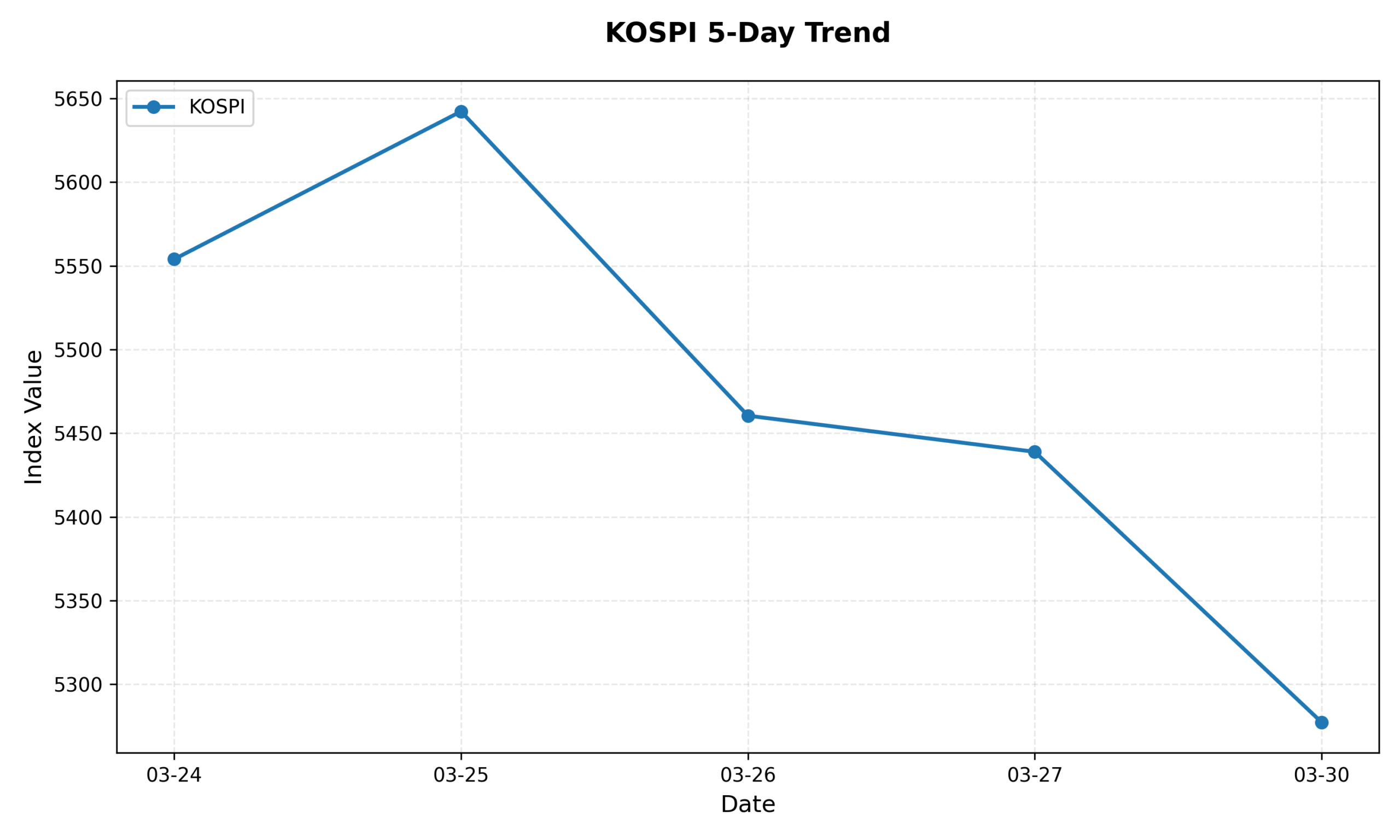
The KOSPI index showed a clear downward trend over the past week as fears of a wider Middle East conflict grew. The index, which was already facing pressure from high interest rates and a volatile global economic outlook, was further battered by the sudden escalation in geopolitical tensions. Foreign investors were particularly active in the sell-off, with net sales reaching over 20,945 million won as they reduced their exposure to emerging market assets. This retreat is a direct response to the heightened KOSPI Middle East tensions that are dominating the headlines.
Samsung Electronics and SK Hynix Face Significant Declines
Samsung Electronics (005930), South Korea’s largest company by market cap, saw its stock price fall by 1.89% to close at 176,300 won. Similarly, SK Hynix (000660), a major player in the global memory chip market, suffered a steeper decline of 5.31%, ending the day at 873,000 won. The sell-off in these heavyweight tech stocks was driven by concerns about global supply chain disruptions and a potential slowdown in demand if the KOSPI Middle East tensions continue to escalate. The concentration of revenue in these sectors makes the Korean market particularly vulnerable to global shocks.
The KOSDAQ index also faced a significant downturn, falling 3.02% to close at 1,107.05. The tech-heavy secondary market was particularly sensitive to the overall risk-averse sentiment, with over 1,300 stocks ending the day in negative territory. This broad-based decline highlights the depth of the market’s concern regarding the geopolitical situation.
Looking Ahead: Market Sentiment and Outlook
Market analysts at kstocks.net suggest that the near-term outlook for the South Korean stock market will remain highly dependent on the situation in the Middle East. If the conflict shows signs of stabilization, the market may see a relief rally, but further escalation could lead to more volatility and downward pressure on indices. The KOSPI Middle East tensions are likely to remain the primary driver of market sentiment in the coming days.
The Korean won also weakened significantly, with the exchange rate reaching 1,515 KRW/USD, reflecting the overall risk-off environment. This currency volatility adds another layer of complexity for foreign investors and could lead to further capital outflows if the situation does not improve. The central bank’s response to this currency pressure will be closely watched by market participants.
Data Source: Naver Finance, KRX
This article is based on the latest market data from Naver Finance and the Korea Exchange (KRX).
Investment Disclaimer: The information provided in this article is for educational and informational purposes only and should not be construed as investment advice. Trading and investing in the stock market involves risk, and you should always conduct your own research or consult with a financial advisor before making any investment decisions. Kstocks.net is not responsible for any financial losses resulting from the use of this information.
About the Author
Johnny Lee
Seoul-based full-time professional and individual investor with 5 years of active experience in the Korean stock market. My approach combines value investing with medium-term swing trading across a diversified portfolio. In 2025, my personal account delivered a 72.9% return, significantly outperforming the KOSPI benchmark. I started KStocks to bring the Korean investor perspective directly to a global English-speaking audience.
Korean blog: blog.naver.com/taximum | Contact: golchoa@gmail.com