KOSPI and KOSDAQ Plunge on Sharp Global Political Uncertainty
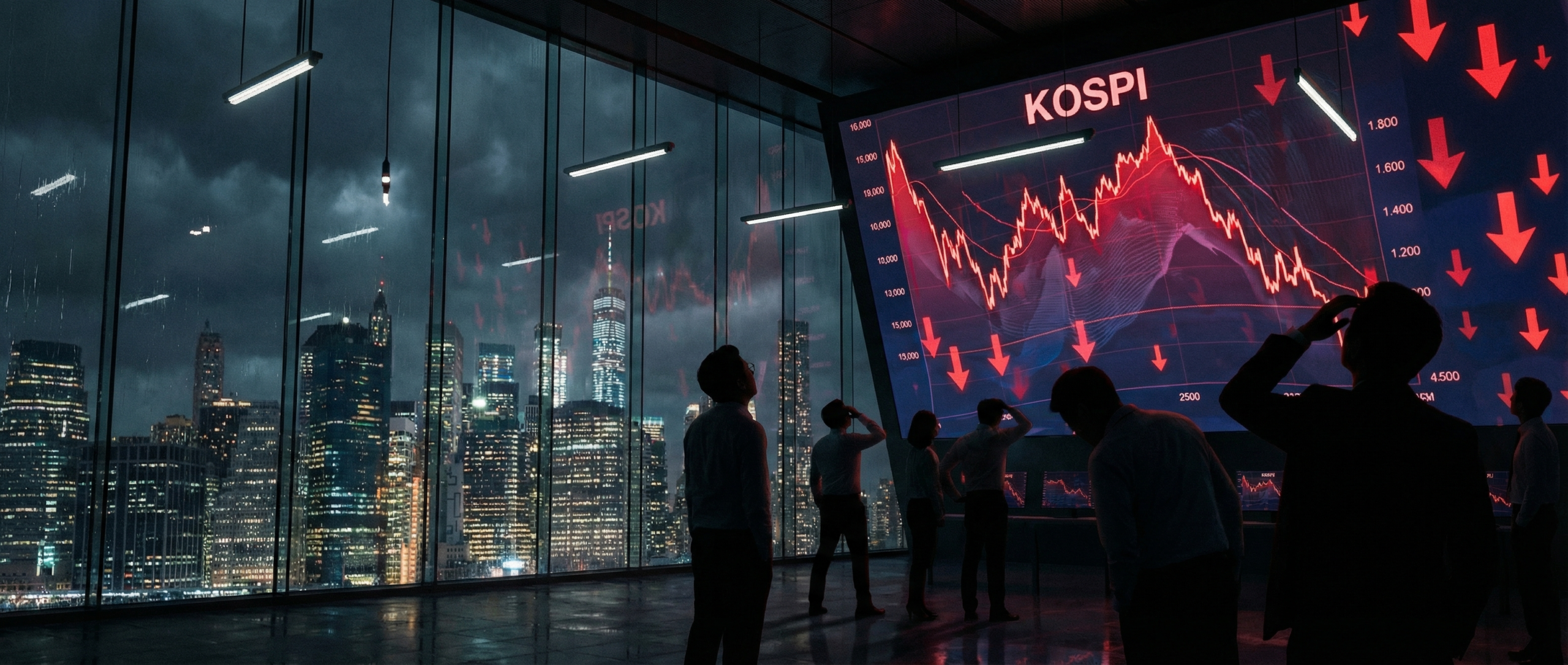
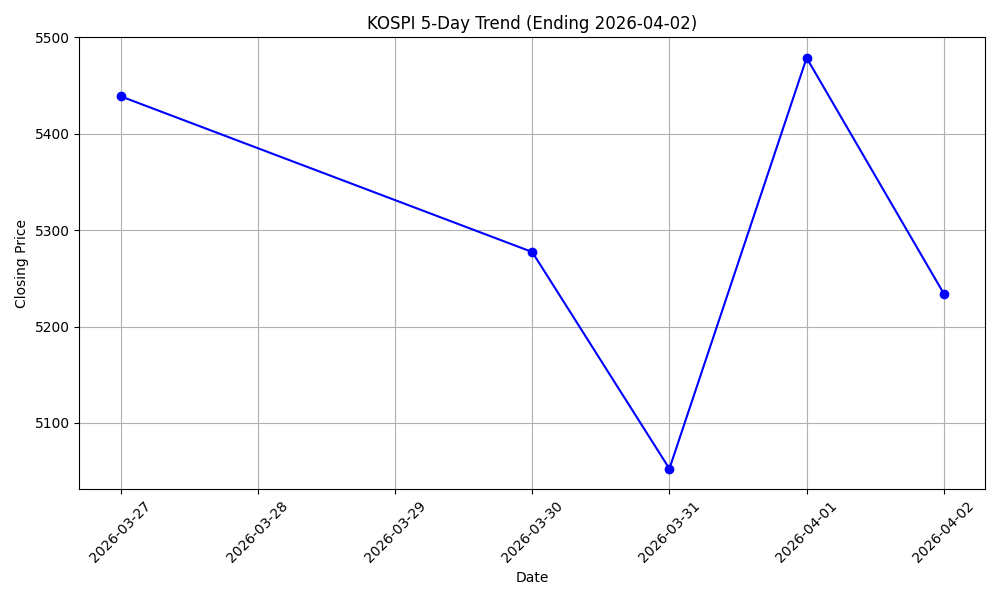
The South Korean stock market experienced a dramatic downturn on Thursday, April 2, 2026, as both the KOSPI and KOSDAQ indices plummeted following renewed concerns over global political shifts, often referred to by local analysts as “Trump Risk.” The KOSPI (KS11) closed at 5,234.05, dropping 244.65 points or 4.47% from the previous session. The tech-heavy KOSDAQ (KQ11) fared even worse, falling 5.36% to end at 1,056.34.
Market Summary and Sidecar Activation
The sudden sell-off triggered a “Sidecar” activation, temporarily suspending program trading as the market’s volatility exceeded critical thresholds. This level of market movement has not been seen in several months, as the index had previously been on a steady upward trajectory towards 6,000 in early 2026. The shift in sentiment was largely driven by narrative context regarding US-Korea trade policies and potential shifts in global geopolitical stability.
Investor Flow and Net Trade Data
Foreign investors turned significantly cautious, recording a net sell-off of 136.9 billion KRW in the KOSPI market and 86.5 billion KRW in the KOSDAQ market. Institutional investors also pulled back sharply, with a massive net sell-off of 1.45 trillion KRW in the main board. Retail investors, on the other hand, attempted to bargain-hunt, showing a net purchase of 1.21 trillion KRW in KOSPI and 616.0 billion KRW in KOSDAQ, though this was not enough to stem the tide of the decline.
| Market Index | Closing Value | Change | % Change |
|---|---|---|---|
| KOSPI (KS11) | 5,234.05 | -244.65 | -4.47% |
| KOSDAQ (KQ11) | 1,056.34 | -59.84 | -5.36% |
Top Movers and Sector Performance
Major blue-chip stocks led the decline. Samsung Electronics (005930), which had seen a record 13% surge on the previous day (April 1), gave back a significant portion of its gains as foreign funds exited. SK Hynix (000660) also witnessed heavy selling pressure, reflecting the broader semiconductor sector’s vulnerability to global political shifts. Automotive leader Hyundai Motor (005380) and EV battery giant LG Energy Solution (373220) followed the downward trend, both recording losses exceeding 4%.
For a deeper dive into these market movements, you can visit kstocks.net for more insights.
Narrative Context: The ‘Trump Risk’ and Market Resilience
The “Trump Risk” narrative refers to the market’s reaction to potential changes in U.S. foreign and trade policies as the 2026 U.S. mid-term elections approach and political discourse intensifies. The Korean market, heavily dependent on global trade and semiconductor exports, remains highly sensitive to these shifts. While the day’s plunge was severe, some analysts suggest the underlying fundamentals of the memory chip boom continue to support the long-term upward trend that saw the KOSPI break 5,000 earlier this year.
Data Citation: Data obtained from Naver Finance, KRX (Korea Exchange), and Bloomberg Terminal as per the finance principles of the finance-principles skill. All figures reflect the final closing prices as of April 2, 2026.
Investment Disclaimer: This article is for informational purposes only and does not constitute financial advice. Investing in the stock market involves significant risk. Always consult with a qualified financial advisor before making investment decisions.
About the Author
Johnny Lee
Seoul-based full-time professional and individual investor with 5 years of active experience in the Korean stock market. My approach combines value investing with medium-term swing trading across a diversified portfolio. In 2025, my personal account delivered a 72.9% return, significantly outperforming the KOSPI benchmark. I started KStocks to bring the Korean investor perspective directly to a global English-speaking audience.
Korean blog: blog.naver.com/taximum | Contact: golchoa@gmail.com