Samsung Electronics (005930) · SK Hynix (000660) · NAVER (035420) · Kakao (035720)
Morning Report: KOSPI Market Crash as ‘Trump Shock’ Rattles South Korea
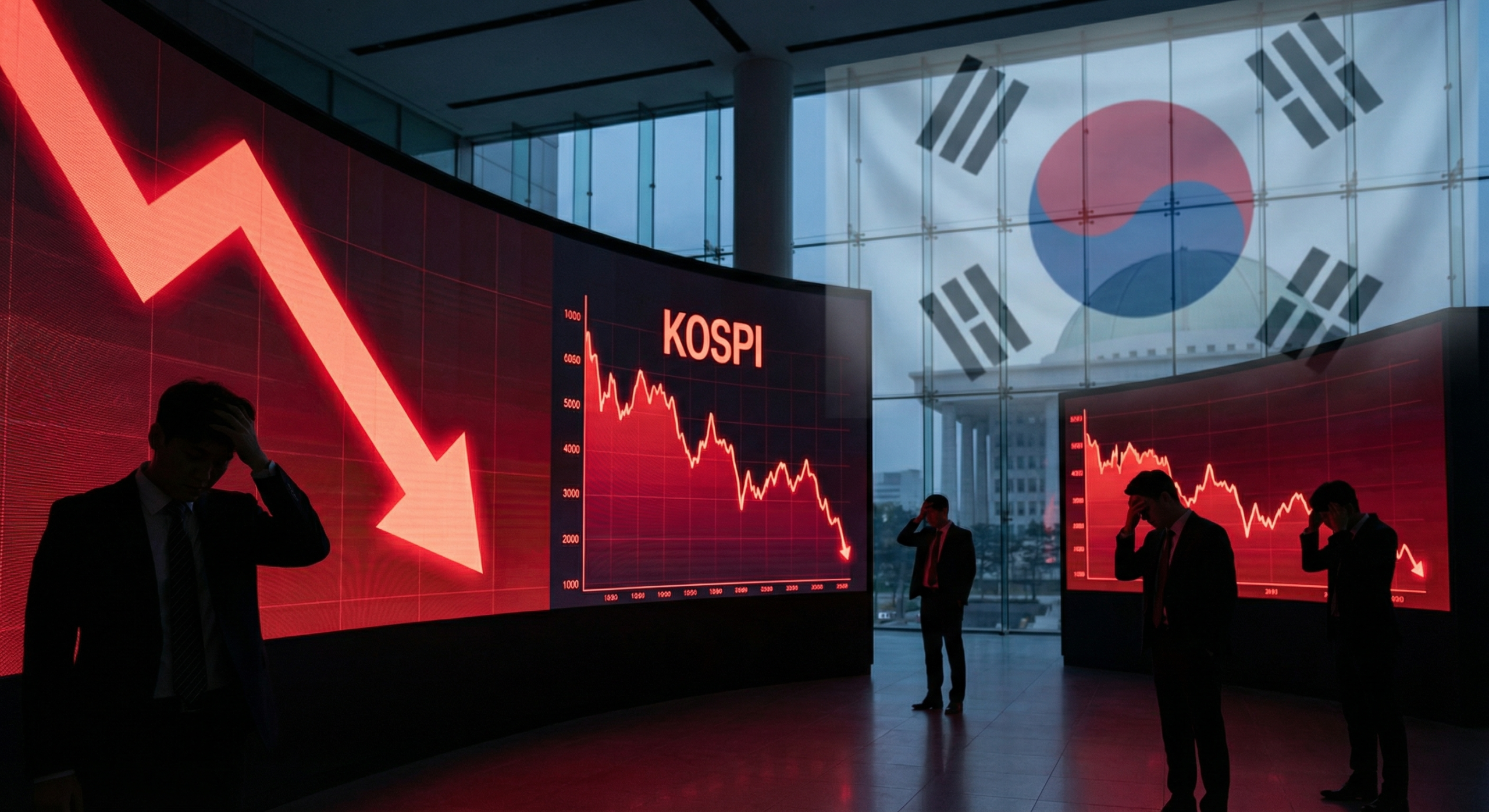
The South Korean financial markets faced an unprecedented wave of selling on March 23, 2026, as the “Trump Shock” sent ripples of panic through global trading floors. The benchmark KOSPI index suffered one of its steepest single-day declines in recent history, plummeting by over 6% and breaking key psychological support levels. Investor sentiment has been severely dampened by a combination of aggressive trade rhetoric from the United States, escalating geopolitical tensions in the Middle East, and a rapidly weakening Korean Won.
As of the market close on March 23, the KOSPI Market Crash saw the index finish at 5,405.75, a staggering drop of 375.45 points, or 6.49%. The tech-heavy KOSDAQ index followed suit, falling 64.63 points, or 5.56%, to end at 1,096.89. The scale of the sell-off has raised concerns about the stability of the domestic financial system, with the Won-to-Dollar exchange rate surging to 1,517 KRW, the highest level seen in years.
The ‘Trump Shock’ and Trade Policy Uncertainty
The primary driver behind this KOSPI Market Crash is the looming uncertainty surrounding “Trump 2.0” policies. Following recent political shifts in the United States, investors are bracing for a more protectionist trade environment. South Korea, being a heavily export-dependent economy, is particularly vulnerable to potential tariff hikes and the renegotiation of trade agreements. Markets are pricing in a future where South Korean semiconductor and automotive exports face significant barriers in their largest market.
Analysts at major brokerage firms noted that the speed of the decline was accelerated by automated trading and margin calls. “We are seeing a perfect storm of policy risk and currency volatility,” noted KB Securities and Mirae Asset analysts. “The ‘Trump Shock’ isn’t just about rhetoric anymore; it is becoming a tangible threat to the earnings outlook of South Korea’s leading companies.”
Samsung Electronics and SK Hynix Lead the Downturn
The semiconductor giants, which form the backbone of the KOSPI, bore the brunt of the onslaught. Samsung Electronics (005930) saw its share price tumble below the 190,000 won mark, finishing the day down approximately 6.57%. This break below a significant price level has triggered technical selling, as the stock had been a relative island of stability in previous months.
SK Hynix (000660) fared even worse, plunging 7.35%. Beyond the general trade concerns, the semiconductor sector is also grappling with supply chain disruptions. Recent reports from kstocks.net indicate that the escalation of conflict in the Middle East has threatened the supply of critical noble gases and materials essential for high-end chip fabrication. The combination of falling demand for global tech products and rising production costs has led to a massive outflow of foreign capital from the sector.
Platform Giants NAVER and Kakao Hit Hard
While the focus was on hardware and exports, the domestic internet and platform sectors were not immune. NAVER (035420) and Kakao (035720) faced selling pressure as investors rotated out of growth stocks amid rising interest rates and currency instability. The weakening Won has increased the cost of overseas infrastructure and content acquisitions for these giants, while domestic consumer sentiment is expected to cool as inflation pressures remain high.
The KOSDAQ’s decline was largely driven by these platform shares and the secondary battery sector. The battery manufacturers, closely tied to the global electric vehicle market, are facing their own set of challenges as subsidies in major markets are being reconsidered under the new U.S. policy direction.
Market Outlook and Institutional Response
The rapid KOSPI Market Crash has prompted the South Korean government and the Bank of Korea to monitor the situation closely. There is growing talk of market stabilization measures, including the potential activation of stock market stabilization funds. However, with the exchange rate at 1,517 won, the central bank’s room for maneuver is limited, as any aggressive support for the stock market could further weaken the currency.
Foreign investors were net sellers of over 70,000 billion won on the KOSPI today, while institutional investors also offloaded significant positions to manage risk. Individual investors were the primary buyers, attempting to “buy the dip,” but they were unable to stem the tide of institutional selling.
Conclusion: Navigating the Uncertainty
The “Trump Shock” has fundamentally altered the near-term outlook for South Korean equities. While the fundamentals of companies like Samsung Electronics remain strong in terms of technology leadership, the external environment has become increasingly hostile. Investors are advised to remain cautious and look for signs of currency stabilization and clearer policy signals from Washington before making significant new commitments.
Data Source: Naver Finance, KRX (Korea Exchange)
Investment Disclaimer: The information provided in this article is for informational purposes only and does not constitute investment advice. Investing in the stock market involves risk, and past performance is not indicative of future results. Please consult with a professional financial advisor before making any investment decisions.
About the Author
Johnny Lee
Seoul-based full-time professional and individual investor with 5 years of active experience in the Korean stock market. My approach combines value investing with medium-term swing trading across a diversified portfolio. In 2025, my personal account delivered a 72.9% return, significantly outperforming the KOSPI benchmark. I started KStocks to bring the Korean investor perspective directly to a global English-speaking audience.
Korean blog: blog.naver.com/taximum | Contact: golchoa@gmail.com